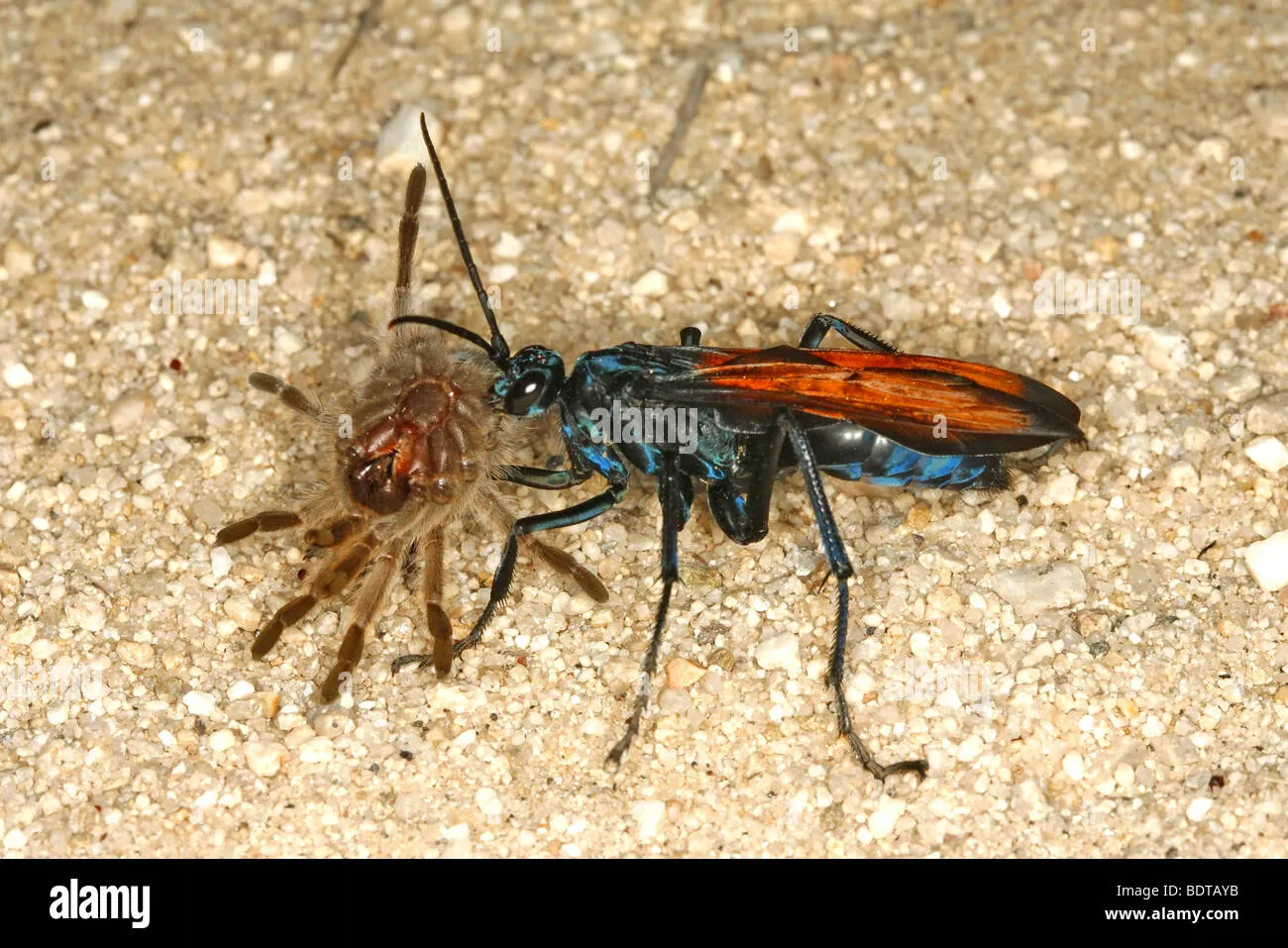
What is a Tarantula Hawk?
The tarantula hawk is a remarkable insect, a type of spider wasp renowned for its size and potent sting. These wasps are among the largest in the world, easily recognizable by their striking appearance often featuring a black or blue-black body and vibrant orange wings. They are solitary creatures, with the females being particularly known for their hunting prowess. Their primary target? Tarantulas, which they paralyze with their sting before dragging them to a burrow to serve as a host for their larvae. These impressive insects are a fascinating part of the desert ecosystems they inhabit.
The Tarantula Hawk’s Powerful Sting and Defense
The tarantula hawk is well-equipped for defense. The female tarantula hawk possesses an incredibly painful sting, which is said to be among the most painful insect stings in the world, although not usually life-threatening to humans. This potent sting serves multiple purposes: it is used to paralyze tarantulas, providing a means to secure food for their larvae, and it also acts as a formidable defense mechanism against potential predators. The sting delivers a neurotoxin that quickly incapacitates the target, giving the wasp a significant advantage in both hunting and self-preservation. They can also use their powerful mandibles to bite if necessary, adding another layer of defense.
Why are Tarantula Hawks a Target for Predators?

Despite their impressive defenses, tarantula hawks are not immune to predation. Their size, rich nutritional content, and the sheer abundance of these wasps in certain habitats make them an appealing target for a variety of animals. The very attributes that make them successful hunters, such as their size and the energy they expend on hunting tarantulas, also make them vulnerable. Predators are constantly seeking opportunities to gain energy, and tarantula hawks, while dangerous, provide a substantial meal. The timing of their activity, often coinciding with the tarantula hawks’ mating seasons, can make them more exposed to predation. Furthermore, some predators have evolved strategies to overcome the tarantula hawk’s defenses.
Top 5 Predators of the Tarantula Hawk
Roadrunners
Roadrunners, those speedy birds of the desert southwest, are known to include tarantula hawks in their diet. They are opportunistic predators, and their agility and speed allow them to successfully hunt these wasps. Roadrunners are remarkably efficient hunters, often able to catch their prey on the ground and in mid-air. They are well adapted to desert life, capable of withstanding the heat and able to find and consume various insects and small animals. They have the ability to take advantage of any opportunity and are very well adapted to preying on tarantula hawks.
Diet of Roadrunners

The diet of a roadrunner is incredibly diverse, reflecting their opportunistic hunting style. They consume a wide array of insects, including grasshoppers, beetles, and, notably, tarantula hawks. Besides insects, they also feed on small reptiles such as lizards and snakes, small mammals like rodents, fruits, and seeds. This varied diet allows them to thrive in different environments and adapt to changing food availability. Their ability to consume everything from insects to small vertebrates makes them a significant predator in their ecosystems.
Hunting Strategies of Roadrunners
Roadrunners utilize a combination of speed, stealth, and agility in their hunting strategies. They can run at speeds up to 20 mph, enabling them to chase down prey across open terrain. They also use a combination of stalking and quick bursts of speed to catch their targets by surprise. The roadrunner will often perch on a high point, scanning the area for potential prey. Once spotted, it will either run the prey down or approach stealthily. Their ability to take down a tarantula hawk is a testament to their adaptability and skill as hunters.
Foxes
Foxes, with their keen senses and cunning nature, also occasionally prey on tarantula hawks. Foxes will actively hunt a variety of creatures, including insects, small mammals, and birds. The tarantula hawk, though dangerous, can sometimes be vulnerable to a fox’s hunting strategies. The fox’s ability to navigate varied terrains, combined with its powerful jaws and teeth, allows it to tackle prey that others might avoid. While not a primary food source, tarantula hawks can be an occasional part of a fox’s diverse diet, especially where they are abundant and other food sources are scarce.
Foxes Hunting Techniques

Foxes employ a variety of hunting techniques, including stealth, ambush, and persistence. They have exceptional senses of smell and hearing, allowing them to detect prey from a distance. Foxes often stalk their targets, using cover to get as close as possible before launching a final attack. They are incredibly patient hunters, sometimes waiting for hours for an opportunity to strike. Their intelligence allows them to adapt their hunting methods to the specific prey they are pursuing. This adaptability makes them highly successful predators in a variety of ecosystems.
How Foxes Deal with the Sting
The ability of foxes to deal with the sting of a tarantula hawk is a matter of debate and likely depends on the individual fox and its hunting strategy. Some foxes might avoid direct contact, using their paws to disable the wasp before consuming it. Others may target the wasp in ways that minimize the chance of being stung, perhaps by quickly biting the head or other vulnerable areas. A fox’s thick fur might provide some protection against stings, although it’s unlikely to be a complete barrier. Generally, foxes show a level of carefulness and adaptation when engaging with such dangerous prey, showcasing their intelligence and adaptability.
Opossums
Opossums are another surprising predator of tarantula hawks. These marsupials are known for their scavenging habits and their ability to eat almost anything. They are opportunistic feeders and will eat a wide range of food items, including insects. Opossums are generally nocturnal and tend to forage at night, increasing their chances of encountering tarantula hawks. Their adaptability and lack of strong preferences allow them to eat anything from fruits and vegetables to carrion and insects like tarantula hawks. Their presence in an area indicates that they may take advantage of whatever opportunities for food are presented.
Opossums Dietary Habits

Opossums have a remarkably diverse diet, making them one of the most adaptable animals. Their omnivorous nature means they readily consume both plant and animal matter. They eat fruits, vegetables, insects, small rodents, eggs, carrion, and much more. They often forage in the dark, using their keen sense of smell to locate food. Opossums play an essential role in their ecosystems, cleaning up decaying matter and helping to control insect populations. Their ability to eat almost anything is a testament to their adaptability.
Opossums Protection Against Stings
Opossums may have a degree of natural protection against insect stings. While they aren’t immune, their thick fur and skin can provide some insulation against the stinger. The exact effectiveness of this protection isn’t fully understood, but it likely provides them with some advantage. Also, opossums may target specific parts of the tarantula hawk, perhaps incapacitating them before they can sting. They also may be able to tolerate the venom to a higher degree than some other animals. The combination of these factors can make them relatively successful predators.
Other Birds of Prey
Various other birds of prey, such as hawks and falcons, have also been documented preying on tarantula hawks. These birds are equipped with sharp talons and powerful beaks designed for hunting. Their aerial prowess and keen eyesight allow them to spot tarantula hawks from a distance. Hawks and falcons are skilled hunters, and they are quite capable of dealing with venomous prey. They have strategies for attacking and killing tarantula hawks, which includes, for example, quickly disabling the wasp and avoiding its sting.
Hawks and Falcons Predatory Behavior

Hawks and falcons are known for their predatory prowess and aerial hunting tactics. Hawks often soar high in the sky, scanning the terrain for movement. Once prey is spotted, they dive down at high speed, using their talons to strike with deadly accuracy. Falcons also employ high-speed dives to capture their prey in mid-air. They are skilled at maneuvering through the air and can change direction very quickly. Their exceptional vision and agility make them formidable hunters in a variety of environments, making the tarantula hawks a potentially easy target.
Predatory Adaptations of Other Birds
Birds of prey exhibit several adaptations that make them successful predators. They have incredibly sharp eyesight, allowing them to spot prey from great distances. Their talons are designed for grasping and holding onto their targets. Their beaks are curved and sharp, perfect for tearing flesh. Many birds of prey also have specialized feathers and wing structures, enabling them to fly at high speeds and with precision. These adaptations are crucial for hunting prey like tarantula hawks, which are often dangerous and require swift action to be captured successfully.
Lizards
Certain species of lizards may also occasionally include tarantula hawks in their diet. Lizards are frequently found in the same habitats as tarantula hawks. Opportunistic hunters by nature, lizards will consume anything that fits within their mouths. Their hunting tactics depend on ambush and quick movements. Lizards, in particular, will try to capture insects on the ground. While the tarantula hawk’s sting is a threat, the lizard’s quick reflexes and predatory behavior could allow it to capture a tarantula hawk.
Lizards Hunting Tactics and Dietary Preferences

Lizards primarily employ ambush tactics, patiently waiting for prey to come within striking distance. Many lizards are also fast runners, which allows them to hunt their prey down. Their dietary preferences are wide-ranging, including insects, small vertebrates, and sometimes even plants. Lizards’ diet depends on their size, environment, and the availability of food. Lizards can adapt to various environments and are successful predators.
Lizards’ Response to the Tarantula Hawk’s Sting
The response of lizards to a tarantula hawk’s sting is highly varied and depends on the species and the individual lizard. Some lizards may be more resistant than others to the venom. Some might quickly try to eat the wasp before being stung. The bite might not always be successful. Some lizards might have a tolerance to the venom. However, for smaller lizards, the sting could be harmful, possibly even fatal. The interaction between lizards and tarantula hawks is a dynamic one, shaped by the adaptations of both species.
Conclusion
Summary of Tarantula Hawk Predators

The tarantula hawk, despite its impressive defensive capabilities, faces a variety of predators in its desert ecosystem. Roadrunners, foxes, opossums, hawks, falcons, and even certain lizards are known to include these wasps in their diets. The success of the predator often depends on its hunting style, the environment, and the size of both the predator and the prey. Despite their painful sting and powerful defenses, tarantula hawks are a key part of the food chain.
The Importance of the Tarantula Hawk in the Ecosystem
The tarantula hawk plays an important role in the ecosystems it inhabits. As a predator of tarantulas, it helps control the spider population. Their actions also have indirect effects on other species and their habitats. Their presence, or absence, can affect the dynamics of the ecosystems. The tarantula hawk, in its role as both a predator and a prey item, contributes to the balance and health of the ecosystems.