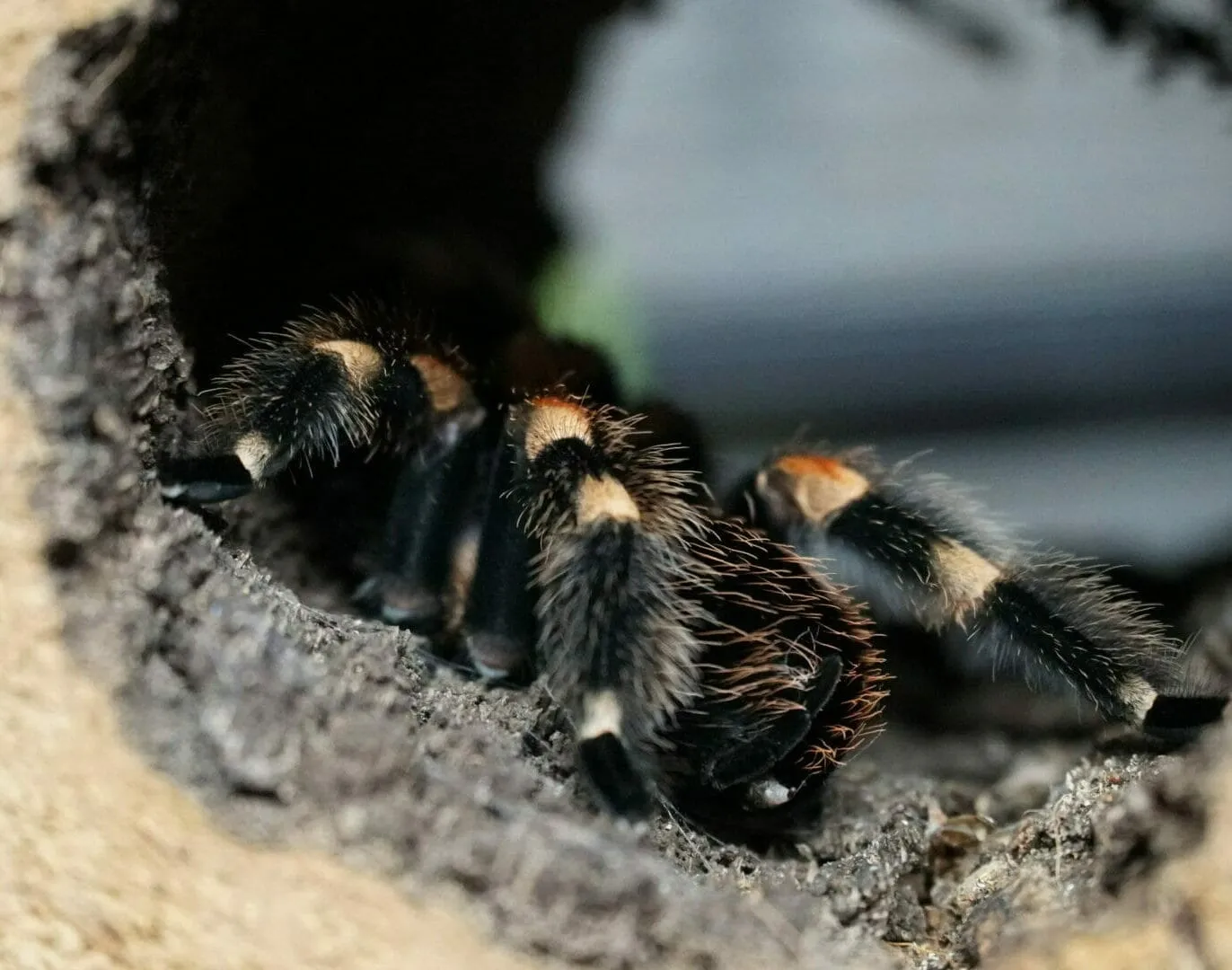
The Mexican Red Knee Tarantula (Brachypelma hamorii), with its striking red and black markings, is a popular pet for both novice and experienced arachnid keepers. A fundamental aspect of caring for these fascinating creatures involves understanding their natural behaviors and habitat preferences, specifically whether they are primarily arboreal (tree-dwelling) or terrestrial (ground-dwelling). Knowing this distinction is crucial for providing the appropriate enclosure setup and ensuring the tarantula’s well-being. This article dives into the key facts that illuminate the arboreal or terrestrial nature of the Red Knee Tarantula, helping owners provide optimal care and appreciate these amazing spiders.
Fact 1 Red Knee Tarantula Habitat Preferences
Red Knee Tarantulas are primarily terrestrial creatures, meaning they spend the majority of their time on the ground. In their natural habitat, which includes the arid scrublands and tropical deciduous forests of the Pacific coast of Mexico, these tarantulas construct burrows or utilize existing ones under rocks, logs, and other ground cover. This behavior contrasts with arboreal tarantulas, which prefer to live in trees, shrubs, and other elevated locations. Understanding this fundamental difference is key to designing a suitable enclosure that meets their needs.
Terrestrial Tarantulas
Terrestrial tarantulas like the Red Knee are adapted to a ground-based lifestyle. They tend to be heavier-bodied and possess shorter legs compared to their arboreal counterparts. Their primary means of finding food involves ambushing prey that ventures close to their burrows. This ambush predator strategy means their enclosure should be designed to accommodate this behavior, allowing for a suitable substrate for burrowing and hiding.
Arboreal Tarantulas

Arboreal tarantulas, in contrast, have evolved to live in trees. They often have longer legs and are more agile climbers. Their enclosures need to provide vertical space, branches, and other climbing structures. While the Red Knee isn’t arboreal, understanding arboreal tarantulas provides context for the differences in lifestyles and behaviors that exist in the tarantula world. They actively hunt for prey from elevated positions, using their speed and agility to capture insects and other small animals.
Fact 2 Physical Adaptations for Lifestyle
The physical characteristics of a tarantula often provide clues about its preferred habitat. These adaptations are the result of natural selection, as the spider’s form and function evolved to suit its environment. The Red Knee Tarantula’s physical traits reflect its terrestrial lifestyle, influencing how it moves, hunts, and interacts with its surroundings. These characteristics are readily observable and can help differentiate between terrestrial and arboreal species.
Terrestrial Adaptations
Red Knee Tarantulas have physical traits that are well-suited to a life on the ground. Their bodies are typically more robust, and their legs are relatively shorter and thicker compared to arboreal tarantulas. The shorter legs provide stability and power for burrowing and moving across the substrate. Additionally, the presence of scopulae (dense pads of hairs on their feet) aids in traction, allowing them to grip surfaces effectively, crucial for navigating uneven terrain within their burrow systems. The Red Knee’s physical design prioritizes stability and strength, allowing it to thrive in its ground-based environment.
Arboreal Adaptations

Arboreal tarantulas often have a different set of physical characteristics. They tend to be more slender and agile, with longer legs that provide a greater reach for climbing and hunting. Their bodies are built for navigating vertical surfaces, and they possess specialized claws and scopulae that aid in gripping branches and bark. These adaptations are not typically found in Red Knee Tarantulas, which further highlights their terrestrial nature.
Fact 3 Behavior Differences
The behavior of a tarantula is another key indicator of its habitat preferences. The Red Knee Tarantula exhibits several behaviors that are consistent with its terrestrial lifestyle. These behaviors are essential for survival and are closely linked to how the tarantula interacts with its environment.
Burrowing Behavior
One of the most defining behaviors of a Red Knee Tarantula is its propensity to burrow. In the wild, they create extensive burrow systems, often digging deep into the soil to create a secure and stable environment. These burrows provide protection from predators, regulate temperature and humidity, and serve as a base for ambushing prey. In captivity, providing a deep substrate is vital to allow for this natural behavior, contributing significantly to the tarantula’s well-being.
Climbing Behavior

While Red Knee Tarantulas are terrestrial, they can and will climb to a limited extent, especially if there are opportunities for shelter. However, they are not agile climbers like arboreal species. Their climbing is often more about finding a suitable hiding spot or exploring their surroundings rather than an essential aspect of their hunting strategy. Their less developed climbing skills, compared to arboreal species, further emphasize their terrestrial adaptation. If a Red Knee Tarantula is spending a lot of time on the walls of the enclosure, this could indicate stress.
Fact 4 Environmental Needs
Understanding the environmental needs of a Red Knee Tarantula is crucial for providing proper care. These needs are directly related to their habitat preferences. Replicating their natural environment, including humidity and substrate, is essential for the spider’s health and happiness. These aspects of care directly impact the tarantula’s ability to thrive in a captive environment.
Humidity Requirements
Red Knee Tarantulas thrive in a relatively dry environment. Maintaining appropriate humidity levels is essential to prevent health issues such as fungal infections. The recommended humidity range for Red Knee Tarantulas is typically between 60 and 70%. This can be achieved by lightly misting one side of the enclosure, allowing the other side to remain dry. Adequate ventilation is also crucial to prevent the buildup of excessive moisture and maintain healthy conditions within the enclosure. The proper humidity promotes proper molting and overall well-being.
Substrate Preferences

The substrate is another important aspect of the Red Knee Tarantula’s environment. As a terrestrial species, the Red Knee benefits from a substrate that allows for burrowing. A good substrate should be deep, provide adequate drainage, and hold moisture. A mixture of coco fiber, peat moss, and a small amount of vermiculite or sphagnum moss is generally recommended. The depth of the substrate should be sufficient to allow the tarantula to create a comfortable burrow. This also provides security and helps regulate humidity. The correct substrate allows the spider to express natural behaviors, such as burrowing and hiding.
Fact 5 Determining Your Tarantula’s Lifestyle
Observing your Red Knee Tarantula’s behavior and enclosure preferences is key to providing optimal care. While the species is typically terrestrial, individual tarantulas may exhibit slight variations in behavior. Therefore, the best approach is to understand the general characteristics of the species and make adjustments based on the specific needs of your tarantula.
Observing Your Tarantula
Spend time observing your tarantula’s behavior. Note how it interacts with its enclosure, including where it spends most of its time, whether it burrows, and how it reacts to changes in the environment. This information will help you tailor its habitat to its needs. Keep a journal, if possible, to track behaviors and enclosure conditions. Regularly monitoring your tarantula is one of the most important factors in ensuring it has a good life.
Signs of Terrestrial Living

If your Red Knee Tarantula is terrestrial, you’ll likely see it spending most of its time on the ground or within its burrow. It will likely have created a burrow or sought shelter under decorations or in the substrate. It will also tend to stay away from the walls of the enclosure except for brief exploration. A terrestrial tarantula will be less inclined to climb and will prioritize activities that support its ground-dwelling lifestyle. Ensuring that its enclosure supports burrowing and provides ample space is a good indicator of a thriving terrestrial tarantula.
Signs of Arboreal Living
While Red Knee Tarantulas are not arboreal, understanding these behaviors can help contextualize care. Arboreal tarantulas would spend a lot of time in elevated positions within the enclosure. They are likely to climb on branches or the sides of the enclosure, exploring their vertical space. They would also be less inclined to burrow. The absence of these behaviors is a further confirmation of your Red Knee Tarantula’s terrestrial nature.
Conclusion
In summary, the Mexican Red Knee Tarantula is unequivocally a terrestrial species. Understanding its habitat preferences, physical adaptations, behaviors, and environmental needs is essential for providing proper care. By creating an enclosure that mimics its natural environment, including appropriate substrate for burrowing, proper humidity levels, and ample space, owners can ensure that their Red Knee Tarantulas thrive. Observing the spider’s behavior and making adjustments based on its specific needs will further enhance its well-being. Providing the right environment allows you to witness the fascinating behaviors of these beautiful spiders.